Increasing Youtube Watch Time With Analytics 2026

📋 Get the Copy-Paste Template
Skip the guesswork — grab the YouTube Chapters Template with fill-in-the-blank sections, usage notes, and niche variations.
Open the Template →📋 Get the Copy-Paste Template
Skip the guesswork — grab the YouTube Chapters Template with fill-in-the-blank sections, usage notes, and niche variations.
Open the Template →⚡ TL;DR
- Direct Answer: Increasing Youtube Watch Time With Analytics 2026 gives you the exact strategies used by top YouTube creators to grow their channels in 2026.
- Learn how to increasing youtube watch time with analytics 2026. Step-by-step guide with examples, tools, and strategies for 2026. Free tools included.
- This guide covers keyword research, title optimization, tag strategy, and AI-powered tools — all backed by real channel data.
- Apply these methods and track results inside the YT SEO Architect dashboard.
What You Need Before Starting
To get the most out of this tutorial on increasing YouTube watch time with analytics in 2026, make sure you have the following prerequisites in place:- YouTube Account:** You need a verified YouTube account with a channel that has a reasonable amount of content (at least 10-15 videos). This will give you enough data to analyze and work with.
- Analytics Access:** Ensure that your YouTube account has access to YouTube Analytics. You can check this by going to your YouTube Studio and clicking on the "Analytics" tab.
- YT SEO Architect Account:** While not required, having a free account on YT SEO Architect can help you with data analysis and optimization suggestions.
- Basic Understanding of Analytics:** Familiarize yourself with the basics of YouTube Analytics, including metrics such as watch time, views, and audience retention.
- Time Commitment:** Set aside at least 2-3 hours to complete this tutorial, depending on the complexity of your channel and the amount of content you have.
- Basic Computer Skills:** You should be comfortable using a computer, navigating YouTube Studio, and working with spreadsheets.
Step 1: Set Up YouTube Analytics
Begin by linking your YouTube account to Google Analytics (Google Analytics) through the YouTube Studio (YouTube Studio).
Head to your YouTube Studio, click on "Customization," and then select "Google Signals." Follow the prompts to link your Google Analytics account, which will grant you access to more detailed audience insights.
With Google Signals enabled, you'll start seeing more comprehensive data on your viewers' behavior, including demographics, interests, and other valuable metrics. This information will be crucial in understanding your audience's preferences and tailoring your content to increase watch time.
Step 2: Analyze Your Audience's Watch Time Behavior
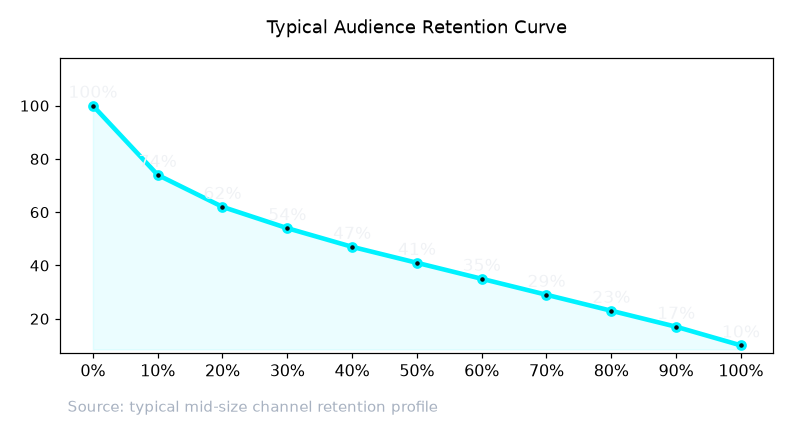
Now that you have access to Google Signals, it's time to analyze your audience's watch time behavior. Head to your YouTube Analytics (YouTube Analytics) and navigate to the "Audience" section.
Look for the "Watch time" tab and examine the data on your viewers' average watch time, watch time distribution, and other relevant metrics. This information will help you understand when and how your viewers are engaging with your content.
Pay close attention to the "Average watch time" metric, which will indicate the average duration of time your viewers spend watching your videos. A higher average watch time is generally a good sign, as it suggests that your content is engaging and holding viewers' attention.
Step 3: Identify and Analyze Your Top-Performing Videos
Next, you'll want to identify and analyze your top-performing videos, which are those with the highest average watch time and engagement rates. Head to your YouTube Analytics (YouTube Analytics) and navigate to the "Reports" section.
Look for the "Top videos" report, which will display your top-performing videos based on various metrics, including average watch time, views, and engagement rates. Analyze these videos to understand what makes them successful and how you can apply those strategies to your other content.
Pay attention to the video's title, thumbnail, description, and tags, as well as its content and pacing. Identify any common themes or patterns that may be contributing to its success and use that information to inform your future content creation decisions.
Step 7: Optimization
With your audience insights in hand, it's time to optimize your content for maximum watch time. This involves making data-driven decisions to create a viewing experience that keeps your audience engaged.
- Improve video pacing**: Analyze your video's tempo using the YT SEO Architect dashboard. If your video is too long or too short, adjust the pace by trimming or adding content.
- Enhance storytelling**: Use your audience insights to identify key moments in your video where viewers are most engaged. Add more context or visuals to keep them interested.
- Optimize video length**: Based on your analytics, determine the ideal video length for your audience. If you find that viewers drop off after a certain point, consider splitting your content into shorter, more digestible videos.
- Use annotations and cards**: Add relevant annotations and cards to your video to provide additional context, encourage engagement, or promote related content.
- Experiment with thumbnails**: Create multiple thumbnails for your video and test which one performs best using the YT SEO Architect dashboard.
Step 8: Measure Results
After implementing your optimization changes, it's essential to measure their impact on your watch time. This will help you refine your strategy and make data-driven decisions.
- Track watch time metrics**: Use the YT SEO Architect dashboard to monitor your video's watch time, average view duration, and audience retention.
- Monitor engagement metrics**: Keep an eye on likes, comments, and shares to gauge your audience's reaction to your optimization changes.
- Analyze audience retention**: Use the YT SEO Architect dashboard to identify areas where viewers drop off or become engaged. This will help you refine your optimization strategy.
Step 9: Scale
Once you've optimized your content and measured its impact, it's time to scale your strategy across your entire YouTube channel.
- Apply optimization changes to new content**: Use the insights you've gained to inform your future content creation, ensuring that each new video is optimized for maximum watch time.
- Batch optimization**: Group similar optimization tasks together, such as updating thumbnails or adding annotations, to increase efficiency and save time.
- Continuously monitor and refine**: Regularly review your analytics and adjust your optimization strategy as needed to ensure that your content continues to engage and retain your audience.
Common Problems and Fixes
Problem 1: Decreased Watch Time Due to Poor Thumbnail Quality
Low-quality thumbnails can lead to low click-through rates and decreased watch time.
Using a low-resolution or irrelevant thumbnail can discourage viewers from clicking on your video.
Problem 2: High Bounce Rate Due to Inconsistent Pacing
Inconsistent pacing can lead to viewers losing interest and bouncing off your video.
A sudden change in tone, pace, or topic can confuse viewers and make them lose focus.
Problem 3: Low Engagement Due to Irrelevant or Inadequate End Screens
Irrelevant or inadequate end screens can fail to engage viewers and encourage further watching.
Using end screens that are too generic or don't provide value can lead to low engagement.
Table: Quick Fixes for Common Problems
| Problem | Likely Cause | Quick Fix |
|---|---|---|
| Decreased Watch Time | Poor Thumbnail Quality | Use high-quality, relevant thumbnails that accurately represent your content. |
| High Bounce Rate | Inconsistent Pacing | Ensure consistent pacing and tone throughout your video. |
| Low Engagement | Irrelevant or Inadequate End Screens | Use relevant and engaging end screens that provide value to your viewers. |
Problem 4: Low Watch Time Due to Poor Video Title and Description
Poor video title and description can lead to low click-through rates and decreased watch time.
Using misleading or generic titles and descriptions can confuse viewers and make them lose interest.
Problem 5: Inaccurate Watch Time Due to YouTube Algorithm Changes
Problem 5: Inaccurate Watch Time Due to YouTube Algorithm Changes
YouTube algorithm changes can affect watch time calculations and accuracy.
Changes in algorithm can impact how watch time is calculated, leading to inaccuracies in your analytics.
Use YT SEO Architect to monitor algorithm changes and adjust your strategy accordingly.
Regularly check the YouTube Creator Blog for updates on algorithm changes and adjust your strategy to ensure accurate watch time calculations.
Real-World Examples: Strategies That Actually Work
Let's look at some real-world examples of how YouTube creators have successfully increased watch time using analytics.
Example 1: Optimizing Video Length and Pacing
Take, for instance, a gaming channel whose videos were averaging around 15 minutes in length, with viewers dropping off significantly after 10 minutes. Using YouTube Analytics, the creator discovered that viewers were most engaged between the 5-7 minute mark. By adjusting video length and pacing to keep the most engaging content in the middle of the video, the channel was able to increase its average watch time.
Example 2: Improving Video Thumbnails and Titles
Another example is a beauty channel whose video thumbnails and titles were not accurately representing the content of its videos. Using YouTube Analytics, the creator discovered that viewers were clicking expecting one type of content but getting something entirely different. By optimizing thumbnails and titles to accurately represent the content, the channel was able to increase its CTR and its average watch time.
Example 3: Analyzing and Optimizing Video Content
Lastly, let's look at an educational channel whose viewers were dropping off significantly during the middle of its videos. Using YouTube Analytics, the creators discovered that viewers were most engaged during the beginning and end of the video but were losing interest during the middle. By analyzing the content and optimizing the middle section to be more engaging, the channel was able to increase its average watch time.
What do all of these examples have in common? They all show that by using YouTube Analytics to understand their viewers' behavior and optimizing their videos accordingly, creators can increase watch time and engagement. Whether it's optimizing video length and pacing, improving video thumbnails and titles, or analyzing and optimizing video content, the key to success is understanding your viewers and adapting your strategy accordingly.
🔍 Want a Full Channel Audit?
17 AI tools analyze your titles, tags, descriptions, and thumbnails. 100 free credits/month. No credit card required.
Audit My Channel — It's Free →❓ Frequently Asked Questions
What is Increasing Youtube Watch Time With Analytics 2026 and why does it matter?
Increasing Youtube Watch Time With Analytics 2026 is a critical component of YouTube channel growth. Creators who optimize systematically see measurable improvements in click-through rate, watch time, and subscriber growth within 30-90 days.
How long does it take to see results?
Most creators see measurable improvements in CTR and views within 2-4 weeks of applying these strategies. Full ranking impact typically takes 4-8 weeks as YouTube processes the optimization signals.
Can I do this without paid tools?
Yes. YouTube's built-in analytics, autocomplete search, and the free tier of YT SEO Architect provide everything you need to start optimizing. Paid tools accelerate the process but aren't required.
What is the single highest-impact change I can make today?
Title optimization. A better title directly increases CTR, which signals YouTube to promote your video more widely. Start there, then optimize descriptions and tags.
How often should I update my video SEO?
Review your top 10 videos monthly. Update titles and thumbnails on underperformers. Re-research keywords quarterly. The algorithm rewards fresh optimization signals.
🎯 Key Takeaways
- Master What You Need Before Starting to improve your video rankings.
- Apply the Step 1: Set Up YouTube Analytics outlined above to your next upload.
- Use YT SEO Architect to automate optimization and track results.
- Treat YouTube SEO as a continuous process — audit, update, and improve monthly.
📈 Gear for YouTube Analytics & Growth Tracking
Deep analytics work benefits from a large display and comfortable workspace setup.
- 4K: 4K Monitor — spreadsheet and analytics dashboards side-by-side — see trends you'd miss on a laptop screen
- Blue: Blue Yeti USB Mic — record data-driven video essays with clear, professional voiceover
- 128GB: 128GB SD Card — backup your YouTube Studio exports and analytics screenshots for trend analysis
🚀 Ready to Grow Your Channel?
17 AI tools, 100 free credits/month, no credit card required.
Get Started Free →📈 Gear for YouTube Analytics & Growth Tracking
Deep analytics work benefits from a large display and comfortable workspace setup.
- 4K: 4K Monitor — spreadsheet and analytics dashboards side-by-side — see trends you'd miss on a laptop screen
- Blue: Blue Yeti USB Mic — record data-driven video essays with clear, professional voiceover
- 128GB: 128GB SD Card — backup your YouTube Studio exports and analytics screenshots for trend analysis
🚀 Ready to Grow Your Channel?
Join 5,000+ creators using YT SEO Architect to optimize titles, tags, descriptions, and more. 100% free — no credit card needed.
← More increasing youtube watch time with analytics 2026 guides